

Products

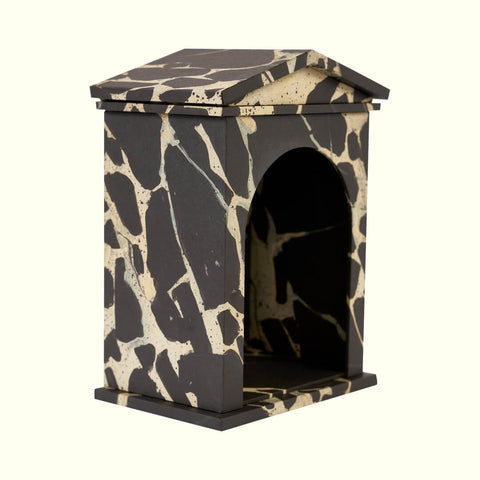
The newest addition to our collection of decorative objects are the meticulously hand built pedimented niches. Made within the Parvum Opus Michigan bindery, these niches are designed to provide a lovely home for your treasured collections. Their design was inspired by the alternating peaked and curved pedimented windows of London's Banqueting House, Whitehall, designed by the architect Inigo Jones for King James I in the 17th century. In a collaboration with Bridie Hall, the pediment niches have been covered in the faux French Antique Marble paper inside and out which has been painted by artist Ian Harper for Bridie and are exclusive to Pentreath & Hall. With their flat backs, these niches are designed to be hung on a wall, but are equally at home on a bookshelf or table.
Dimensions: Height 19.5cm Width 13cm Depth 9cm

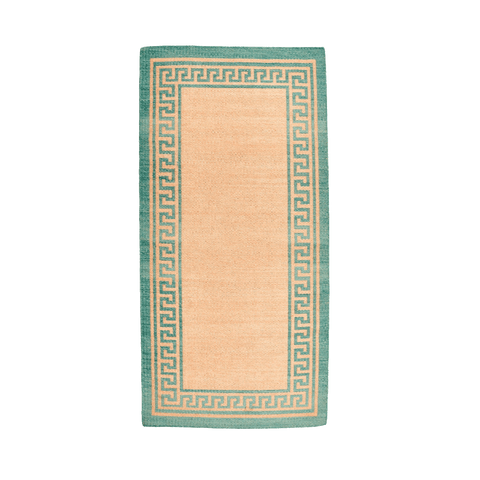


Pentreath & Hall are thrilled to launch an exclusive range of colourful rugs made with Shame Studios.
These yarn rugs have been hand spun and dyed, using the traditional method on a jacquard loom. This technique makes it possible to create the detailed borders and clean vertical joins, which also means the rugs are reversible.
The lanolin rich New Zealand wool makes for a beautiful and durable rug, that will only improve with age. This lanolin also affords the rug a level of natural stain resistance and providing its signature softness and sheen.
Ethically certified by Label Step and produced using the best practices for low environmental impact and fair trading.
Dimensions: Length 142cm, Width 70cm. Reversible.
Made in India.

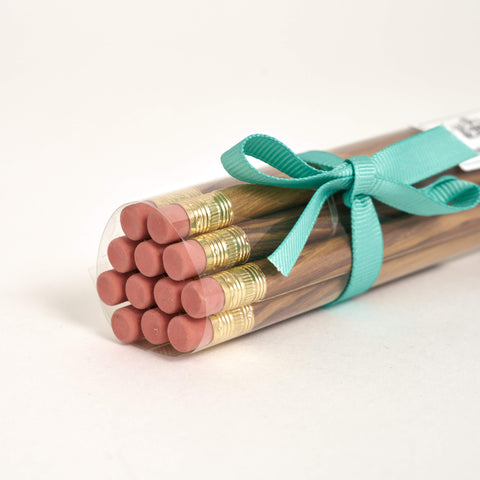
Like candy for your desk and just as impossible to resist, these Parvum Opus paper-jacketed pencils aren’t only a joy to look at, they are a joy to use. Stationery at its chicest. Wrapped in Pitch Pine paper, commissioned by Bridie, from artist Ian Harper exclusively for Pentreath & Hall. These 10cm long pencils are pre-sharpened, and are capped by pink erasers. Pencils are sold in sets of 12.


Minimum Quantity Order - 20 packs - available for dispatch immediately.
Inspired by the paper display trays from the Cobbe Collection and reimagined by Parvum Opus and Bridie Hall.
Enjoy this set of four charming trays. Multi-purpose and performing miracles. Use for catchalls, lipsticks, hair-ties, false teeth, loose change, diamonds, key rings. Carry them flat in your pocket, assemble in a second for impromptu hosting on a hillside.
Each tray is printed internally with an 18th century engraving from Piranesi and externally with one of our fine faux stone finishes.
To assemble: Fold tray sides inwards, forming sharp, crisp creases along the scored lines. On the outside of the tray, use the enclosed stickers to close the seams and enjoy!
Tray Dimensions after assembly:
Small Rectangle Tray - Width 9.5cm x Height 12.5cm x Depth 2cm
Hexagon Tray - Width 14cm x Height 15.5cm x Depth 2cm
Large Octagon Tray - 11cm x Height 16cm x Depth 2cm
Diamond Tray - Width 13.5cm x Height 20cm x Depth 2cm


Minimum Quantity Order - 20 packs - available for dispatch immediately.
Inspired by the paper display trays from the Cobbe Collection and reimagined by Parvum Opus and Bridie Hall.
Enjoy this set of four charming trays. Multi-purpose and performing miracles. Use for catchalls, lipsticks, hair-ties, false teeth, loose change, diamonds, key rings. Carry them flat in your pocket, assemble in a second for impromptu hosting on a hillside.
Each tray is printed internally with an 18th century illustration of sea shells from Regenfuss' "Choix de Coquillages et de Crustacés" and externally with Parvum Opus 'Giotto Star' motif in differing colours.
To assemble: Fold tray sides inwards, forming sharp, crisp creases along the scored lines. On the outside of the tray, use the enclosed stickers to close the seams and enjoy!
Tray Dimensions after assembly:
Small Rectangle Tray - Width 9.5cm x Height 12.5cm x Depth 2cm
Hexagon Tray - Width 14cm x Height 15.5cm x Depth 2cm
Large Octagon Tray - 11cm x Height 16cm x Depth 2cm
Diamond Tray - Width 13.5cm x Height 20cm x Depth 2cm

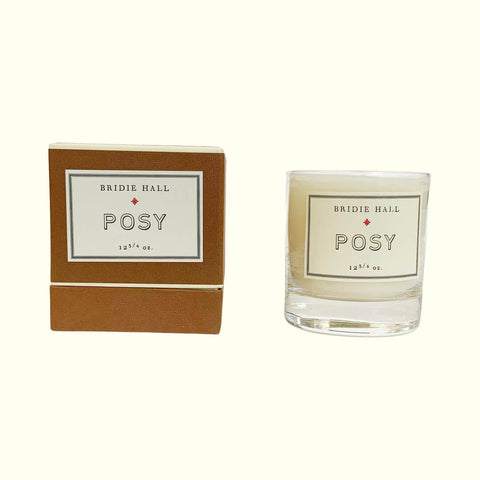
These handmade candles with a woven natural cotton wick have a steady burn and excellent scent throw. Please read safety and burning instructions on the base of the votive before lighting. The 12 3/4oz candle comes boxed and has a 60 hour burn time.

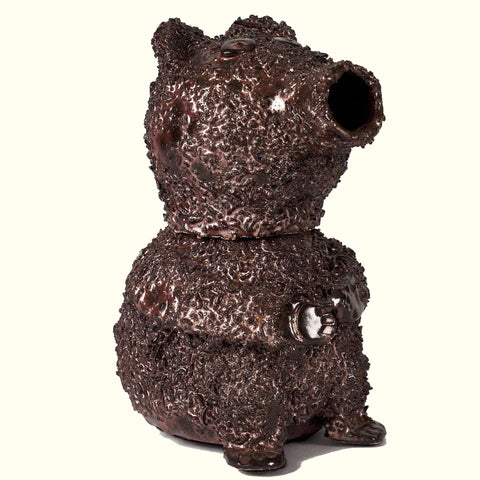
Adventurine Brown Glaze. Dimensions: Height 18cm, Diameter 10cm. Individually handmade by Bridie Hall - no two are the same.
"For as long as l have visited the pottery galleries at the V&A, I have admired their small collection of bear bottles and jugs. As my interest in pottery grew and turned into a hobby, I would notice more examples of these bears in museums and on specialist antique dealer websites.
Over the summer, I took a week out to stay home and make pottery all day, every day. I lined up the podcasts and figured out how I would make my version of a bear bottle. By then, I’d read up enough to know their origins and decided to omit the chains and dogs and thought a lot about the colours I would glaze them.
These bears were going to have happier lives. The more I made, the more I found out about them. Their history increasingly informed my plans for the little fellows and I decided not to turn them into something cute or funny.
Though, as strange as it sounds, I was happy to keep a slightly creepy weirdness about them.
I’m often attracted to the weird and wonderful and what first captivated me about these curious little things was their construction and purpose, and also the play on words; a ‘bear’ shaped ‘beer’ bottle. I loved the naivety of their form and the effect of the metallic tin glaze on the pottery ‘grog’ fur.
I thought that anyone able to make a chain from clay was very clever and to see surviving examples from the C18th, very special.
I amaze myself at how slow on the uptake I can be sometimes; how couldn’t I see what the chain might be for and why indeed these bears were holding dogs? The production side of my brain often takes over thoughts and it was asking ‘how would I make that?’ instead of ‘what is that?’.
The whimsical nature of my C18th inspirations portray the cruel yet popular sport of bear-baiting, a legal recreation in England until 1835. Made as souvenirs, they served as bottles, jugs and tobacco jars. The body of the bottle held the liquid contents while the head covered the opening and provided a drinking cup. Quite a social commentary of the time.
The bear bottles were made at a time when society was comfortable with the blood sport as entertainment. It was extremely popular from the Elizabethan period until it was banned in the C19th, over 300 years later. Every town and village throughout Britain is thought to have had a ‘bear garden’ (brings a new meaning to the word) where these spectacles were staged. What happened within these ‘bear gardens’ is truly too brutal to think about. Bulls were also dealt the same fate.
Despite being largely outlawed, sadly, there still remain small pockets in the world where bears continue to be cruelly exploited for this type of entertainment.
Since 1997, good work by the World Animal Protection charity has seen the number of bear-baiting events decrease dramatically. Success lies within working with local law enforcement officials and the bear owners themselves to support them in alternative livelihoods.
While the entire nature of this project has remained so very niche to me, with everything I have learned along the way, I have decided there is only one thing that I can do with these bear bottles that will help see their living counterparts into a better life - I will donate all proceeds of their sale to World Animal Protection.
I’m really pleased to be able to help this wonderful charity in their mission to help to liberate and care for these wonderful creatures. There is still a lot of cruelty in the world - we can help to stop it, and this is where I would like to lend a hand".
Alternatively, please visit the World Animal Protection Website to read about the work they do and consider supporting them with a donation, no amount is too small. Thank you.
The photograph of the bear relaxing is taken at one of the World Animal Protection supporter-funded bear sanctuaries - courtesy of World Animal Protection.

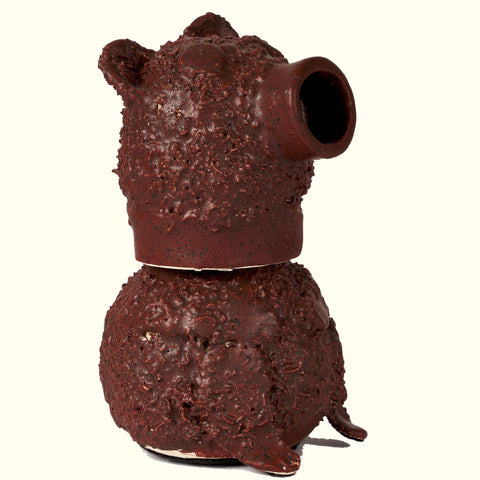
Adventurine Brown Glaze. Dimensions: Height 18cm, Diameter 10cm. Individually handmade by Bridie Hall - no two are the same.
"For as long as l have visited the pottery galleries at the V&A, I have admired their small collection of bear bottles and jugs. As my interest in pottery grew and turned into a hobby, I would notice more examples of these bears in museums and on specialist antique dealer websites.
Over the summer, I took a week out to stay home and make pottery all day, every day. I lined up the podcasts and figured out how I would make my version of a bear bottle. By then, I’d read up enough to know their origins and decided to omit the chains and dogs and thought a lot about the colours I would glaze them.
These bears were going to have happier lives. The more I made, the more I found out about them. Their history increasingly informed my plans for the little fellows and I decided not to turn them into something cute or funny.
Though, as strange as it sounds, I was happy to keep a slightly creepy weirdness about them.
I’m often attracted to the weird and wonderful and what first captivated me about these curious little things was their construction and purpose, and also the play on words; a ‘bear’ shaped ‘beer’ bottle. I loved the naivety of their form and the effect of the metallic tin glaze on the pottery ‘grog’ fur.
I thought that anyone able to make a chain from clay was very clever and to see surviving examples from the C18th, very special.
I amaze myself at how slow on the uptake I can be sometimes; how couldn’t I see what the chain might be for and why indeed these bears were holding dogs? The production side of my brain often takes over thoughts and it was asking ‘how would I make that?’ instead of ‘what is that?’.
The whimsical nature of my C18th inspirations portray the cruel yet popular sport of bear-baiting, a legal recreation in England until 1835. Made as souvenirs, they served as bottles, jugs and tobacco jars. The body of the bottle held the liquid contents while the head covered the opening and provided a drinking cup. Quite a social commentary of the time.
The bear bottles were made at a time when society was comfortable with the blood sport as entertainment. It was extremely popular from the Elizabethan period until it was banned in the C19th, over 300 years later. Every town and village throughout Britain is thought to have had a ‘bear garden’ (brings a new meaning to the word) where these spectacles were staged. What happened within these ‘bear gardens’ is truly too brutal to think about. Bulls were also dealt the same fate.
Despite being largely outlawed, sadly, there still remain small pockets in the world where bears continue to be cruelly exploited for this type of entertainment.
Since 1997, good work by the World Animal Protection charity has seen the number of bear-baiting events decrease dramatically. Success lies within working with local law enforcement officials and the bear owners themselves to support them in alternative livelihoods.
While the entire nature of this project has remained so very niche to me, with everything I have learned along the way, I have decided there is only one thing that I can do with these bear bottles that will help see their living counterparts into a better life - I will donate all proceeds of their sale to World Animal Protection.
I’m really pleased to be able to help this wonderful charity in their mission to help to liberate and care for these wonderful creatures. There is still a lot of cruelty in the world - we can help to stop it, and this is where I would like to lend a hand".
Alternatively, please visit the World Animal Protection Website to read about the work they do and consider supporting them with a donation, no amount is too small. Thank you.
The photograph of the bear relaxing is taken at one of the World Animal Protection supporter-funded bear sanctuaries - courtesy of World Animal Protection.

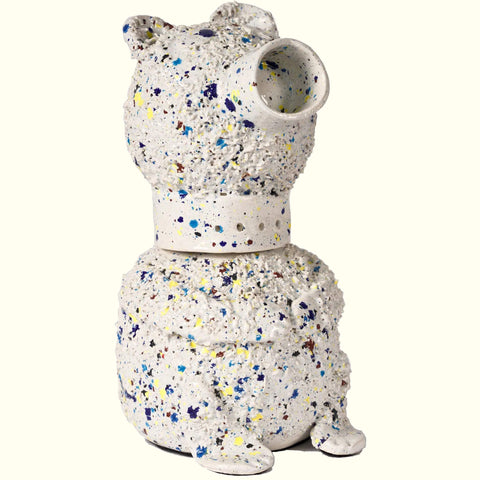
Adventurine Brown Glaze. Dimensions: Height 18cm, Diameter 10cm. Individually handmade by Bridie Hall - no two are the same.
"For as long as l have visited the pottery galleries at the V&A, I have admired their small collection of bear bottles and jugs. As my interest in pottery grew and turned into a hobby, I would notice more examples of these bears in museums and on specialist antique dealer websites.
Over the summer, I took a week out to stay home and make pottery all day, every day. I lined up the podcasts and figured out how I would make my version of a bear bottle. By then, I’d read up enough to know their origins and decided to omit the chains and dogs and thought a lot about the colours I would glaze them.
These bears were going to have happier lives. The more I made, the more I found out about them. Their history increasingly informed my plans for the little fellows and I decided not to turn them into something cute or funny.
Though, as strange as it sounds, I was happy to keep a slightly creepy weirdness about them.
I’m often attracted to the weird and wonderful and what first captivated me about these curious little things was their construction and purpose, and also the play on words; a ‘bear’ shaped ‘beer’ bottle. I loved the naivety of their form and the effect of the metallic tin glaze on the pottery ‘grog’ fur.
I thought that anyone able to make a chain from clay was very clever and to see surviving examples from the C18th, very special.
I amaze myself at how slow on the uptake I can be sometimes; how couldn’t I see what the chain might be for and why indeed these bears were holding dogs? The production side of my brain often takes over thoughts and it was asking ‘how would I make that?’ instead of ‘what is that?’.
The whimsical nature of my C18th inspirations portray the cruel yet popular sport of bear-baiting, a legal recreation in England until 1835. Made as souvenirs, they served as bottles, jugs and tobacco jars. The body of the bottle held the liquid contents while the head covered the opening and provided a drinking cup. Quite a social commentary of the time.
The bear bottles were made at a time when society was comfortable with the blood sport as entertainment. It was extremely popular from the Elizabethan period until it was banned in the C19th, over 300 years later. Every town and village throughout Britain is thought to have had a ‘bear garden’ (brings a new meaning to the word) where these spectacles were staged. What happened within these ‘bear gardens’ is truly too brutal to think about. Bulls were also dealt the same fate.
Despite being largely outlawed, sadly, there still remain small pockets in the world where bears continue to be cruelly exploited for this type of entertainment.
Since 1997, good work by the World Animal Protection charity has seen the number of bear-baiting events decrease dramatically. Success lies within working with local law enforcement officials and the bear owners themselves to support them in alternative livelihoods.
While the entire nature of this project has remained so very niche to me, with everything I have learned along the way, I have decided there is only one thing that I can do with these bear bottles that will help see their living counterparts into a better life - I will donate all proceeds of their sale to World Animal Protection.
I’m really pleased to be able to help this wonderful charity in their mission to help to liberate and care for these wonderful creatures. There is still a lot of cruelty in the world - we can help to stop it, and this is where I would like to lend a hand".
Alternatively, please visit the World Animal Protection Website to read about the work they do and consider supporting them with a donation, no amount is too small. Thank you.
The photograph of the bear relaxing is taken at one of the World Animal Protection supporter-funded bear sanctuaries - courtesy of World Animal Protection.

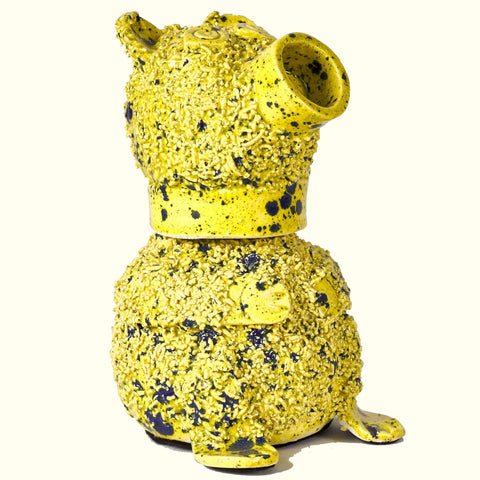
Pansy Glaze. Dimensions: Height 17cm, Diameter 8cm. Individually handmade by Bridie Hall - no two are the same.
"For as long as l have visited the pottery galleries at the V&A, I have admired their small collection of bear bottles and jugs. As my interest in pottery grew and turned into a hobby, I would notice more examples of these bears in museums and on specialist antique dealer websites.
Over the summer, I took a week out to stay home and make pottery all day, every day. I lined up the podcasts and figured out how I would make my version of a bear bottle. By then, I’d read up enough to know their origins and decided to omit the chains and dogs and thought a lot about the colours I would glaze them.
These bears were going to have happier lives. The more I made, the more I found out about them. Their history increasingly informed my plans for the little fellows and I decided not to turn them into something cute or funny.
Though, as strange as it sounds, I was happy to keep a slightly creepy weirdness about them.
I’m often attracted to the weird and wonderful and what first captivated me about these curious little things was their construction and purpose, and also the play on words; a ‘bear’ shaped ‘beer’ bottle. I loved the naivety of their form and the effect of the metallic tin glaze on the pottery ‘grog’ fur.
I thought that anyone able to make a chain from clay was very clever and to see surviving examples from the C18th, very special.
I amaze myself at how slow on the uptake I can be sometimes; how couldn’t I see what the chain might be for and why indeed these bears were holding dogs? The production side of my brain often takes over thoughts and it was asking ‘how would I make that?’ instead of ‘what is that?’.
The whimsical nature of my C18th inspirations portray the cruel yet popular sport of bear-baiting, a legal recreation in England until 1835. Made as souvenirs, they served as bottles, jugs and tobacco jars. The body of the bottle held the liquid contents while the head covered the opening and provided a drinking cup. Quite a social commentary of the time.
The bear bottles were made at a time when society was comfortable with the blood sport as entertainment. It was extremely popular from the Elizabethan period until it was banned in the C19th, over 300 years later. Every town and village throughout Britain is thought to have had a ‘bear garden’ (brings a new meaning to the word) where these spectacles were staged. What happened within these ‘bear gardens’ is truly too brutal to think about. Bulls were also dealt the same fate.
Despite being largely outlawed, sadly, there still remain small pockets in the world where bears continue to be cruelly exploited for this type of entertainment.
Since 1997, good work by the World Animal Protection charity has seen the number of bear-baiting events decrease dramatically. Success lies within working with local law enforcement officials and the bear owners themselves to support them in alternative livelihoods.
While the entire nature of this project has remained so very niche to me, with everything I have learned along the way, I have decided there is only one thing that I can do with these bear bottles that will help see their living counterparts into a better life - I will donate all proceeds of their sale to World Animal Protection.
I’m really pleased to be able to help this wonderful charity in their mission to help to liberate and care for these wonderful creatures. There is still a lot of cruelty in the world - we can help to stop it, and this is where I would like to lend a hand".
Alternatively, please visit the World Animal Protection Website to read about the work they do and consider supporting them with a donation, no amount is too small. Thank you.
The photograph of the bear relaxing is taken at one of the World Animal Protection supporter-funded bear sanctuaries - courtesy of World Animal Protection.

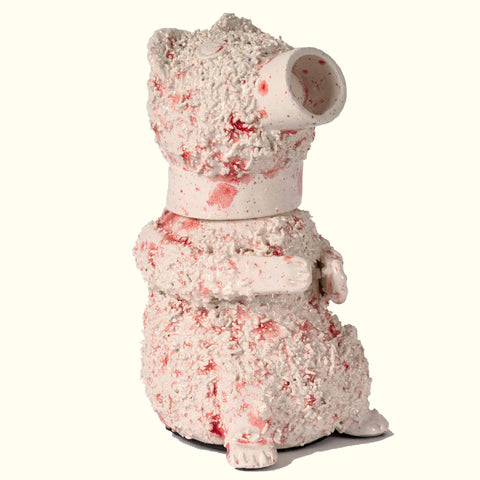
Sunrise Glaze. Dimensions: Height 21cm, Diameter 9cm. Individually handmade by Bridie Hall - no two are the same.
"For as long as l have visited the pottery galleries at the V&A, I have admired their small collection of bear bottles and jugs. As my interest in pottery grew and turned into a hobby, I would notice more examples of these bears in museums and on specialist antique dealer websites.
Over the summer, I took a week out to stay home and make pottery all day, every day. I lined up the podcasts and figured out how I would make my version of a bear bottle. By then, I’d read up enough to know their origins and decided to omit the chains and dogs and thought a lot about the colours I would glaze them.
These bears were going to have happier lives. The more I made, the more I found out about them. Their history increasingly informed my plans for the little fellows and I decided not to turn them into something cute or funny.
Though, as strange as it sounds, I was happy to keep a slightly creepy weirdness about them.
I’m often attracted to the weird and wonderful and what first captivated me about these curious little things was their construction and purpose, and also the play on words; a ‘bear’ shaped ‘beer’ bottle. I loved the naivety of their form and the effect of the metallic tin glaze on the pottery ‘grog’ fur.
I thought that anyone able to make a chain from clay was very clever and to see surviving examples from the C18th, very special.
I amaze myself at how slow on the uptake I can be sometimes; how couldn’t I see what the chain might be for and why indeed these bears were holding dogs? The production side of my brain often takes over thoughts and it was asking ‘how would I make that?’ instead of ‘what is that?’.
The whimsical nature of my C18th inspirations portray the cruel yet popular sport of bear-baiting, a legal recreation in England until 1835. Made as souvenirs, they served as bottles, jugs and tobacco jars. The body of the bottle held the liquid contents while the head covered the opening and provided a drinking cup. Quite a social commentary of the time.
The bear bottles were made at a time when society was comfortable with the blood sport as entertainment. It was extremely popular from the Elizabethan period until it was banned in the C19th, over 300 years later. Every town and village throughout Britain is thought to have had a ‘bear garden’ (brings a new meaning to the word) where these spectacles were staged. What happened within these ‘bear gardens’ is truly too brutal to think about. Bulls were also dealt the same fate.
Despite being largely outlawed, sadly, there still remain small pockets in the world where bears continue to be cruelly exploited for this type of entertainment.
Since 1997, good work by the World Animal Protection charity has seen the number of bear-baiting events decrease dramatically. Success lies within working with local law enforcement officials and the bear owners themselves to support them in alternative livelihoods.
While the entire nature of this project has remained so very niche to me, with everything I have learned along the way, I have decided there is only one thing that I can do with these bear bottles that will help see their living counterparts into a better life - I will donate all proceeds of their sale to World Animal Protection.
I’m really pleased to be able to help this wonderful charity in their mission to help to liberate and care for these wonderful creatures. There is still a lot of cruelty in the world - we can help to stop it, and this is where I would like to lend a hand".
Alternatively, please visit the World Animal Protection Website to read about the work they do and consider supporting them with a donation, no amount is too small. Thank you.
The photograph of the bear relaxing is taken at one of the World Animal Protection supporter-funded bear sanctuaries - courtesy of World Animal Protection.

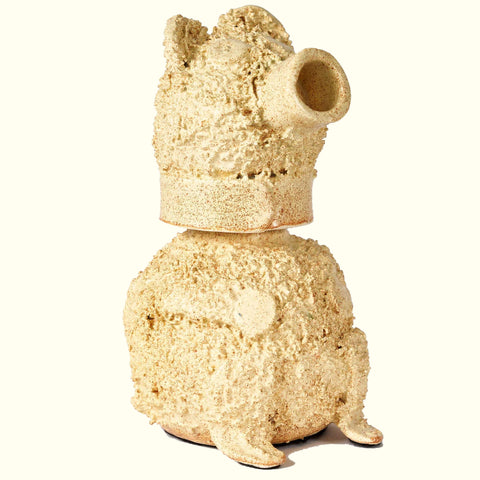
Vanilla Glaze. Dimensions: Height 20cm, Diameter 10cm. Individually handmade by Bridie Hall - no two are the same.
"For as long as l have visited the pottery galleries at the V&A, I have admired their small collection of bear bottles and jugs. As my interest in pottery grew and turned into a hobby, I would notice more examples of these bears in museums and on specialist antique dealer websites.
Over the summer, I took a week out to stay home and make pottery all day, every day. I lined up the podcasts and figured out how I would make my version of a bear bottle. By then, I’d read up enough to know their origins and decided to omit the chains and dogs and thought a lot about the colours I would glaze them.
These bears were going to have happier lives. The more I made, the more I found out about them. Their history increasingly informed my plans for the little fellows and I decided not to turn them into something cute or funny.
Though, as strange as it sounds, I was happy to keep a slightly creepy weirdness about them.
I’m often attracted to the weird and wonderful and what first captivated me about these curious little things was their construction and purpose, and also the play on words; a ‘bear’ shaped ‘beer’ bottle. I loved the naivety of their form and the effect of the metallic tin glaze on the pottery ‘grog’ fur.
I thought that anyone able to make a chain from clay was very clever and to see surviving examples from the C18th, very special.
I amaze myself at how slow on the uptake I can be sometimes; how couldn’t I see what the chain might be for and why indeed these bears were holding dogs? The production side of my brain often takes over thoughts and it was asking ‘how would I make that?’ instead of ‘what is that?’.
The whimsical nature of my C18th inspirations portray the cruel yet popular sport of bear-baiting, a legal recreation in England until 1835. Made as souvenirs, they served as bottles, jugs and tobacco jars. The body of the bottle held the liquid contents while the head covered the opening and provided a drinking cup. Quite a social commentary of the time.
The bear bottles were made at a time when society was comfortable with the blood sport as entertainment. It was extremely popular from the Elizabethan period until it was banned in the C19th, over 300 years later. Every town and village throughout Britain is thought to have had a ‘bear garden’ (brings a new meaning to the word) where these spectacles were staged. What happened within these ‘bear gardens’ is truly too brutal to think about. Bulls were also dealt the same fate.
Despite being largely outlawed, sadly, there still remain small pockets in the world where bears continue to be cruelly exploited for this type of entertainment.
Since 1997, good work by the World Animal Protection charity has seen the number of bear-baiting events decrease dramatically. Success lies within working with local law enforcement officials and the bear owners themselves to support them in alternative livelihoods.
While the entire nature of this project has remained so very niche to me, with everything I have learned along the way, I have decided there is only one thing that I can do with these bear bottles that will help see their living counterparts into a better life - I will donate all proceeds of their sale to World Animal Protection.
I’m really pleased to be able to help this wonderful charity in their mission to help to liberate and care for these wonderful creatures. There is still a lot of cruelty in the world - we can help to stop it, and this is where I would like to lend a hand".
Alternatively, please visit the World Animal Protection Website to read about the work they do and consider supporting them with a donation, no amount is too small. Thank you.
The photograph of the bear relaxing is taken at one of the World Animal Protection supporter-funded bear sanctuaries - courtesy of World Animal Protection.

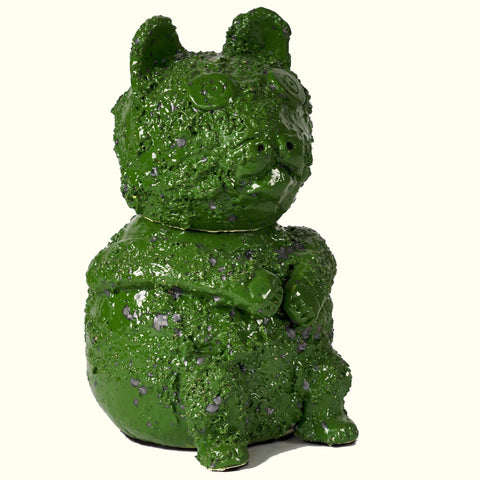
Irish Green Glaze. Dimensions: Height 21cm, Diameter 12cm. Individually handmade by Bridie Hall - no two are the same.
"For as long as l have visited the pottery galleries at the V&A, I have admired their small collection of bear bottles and jugs. As my interest in pottery grew and turned into a hobby, I would notice more examples of these bears in museums and on specialist antique dealer websites.
Over the summer, I took a week out to stay home and make pottery all day, every day. I lined up the podcasts and figured out how I would make my version of a bear bottle. By then, I’d read up enough to know their origins and decided to omit the chains and dogs and thought a lot about the colours I would glaze them.
These bears were going to have happier lives. The more I made, the more I found out about them. Their history increasingly informed my plans for the little fellows and I decided not to turn them into something cute or funny.
Though, as strange as it sounds, I was happy to keep a slightly creepy weirdness about them.
I’m often attracted to the weird and wonderful and what first captivated me about these curious little things was their construction and purpose, and also the play on words; a ‘bear’ shaped ‘beer’ bottle. I loved the naivety of their form and the effect of the metallic tin glaze on the pottery ‘grog’ fur.
I thought that anyone able to make a chain from clay was very clever and to see surviving examples from the C18th, very special.
I amaze myself at how slow on the uptake I can be sometimes; how couldn’t I see what the chain might be for and why indeed these bears were holding dogs? The production side of my brain often takes over thoughts and it was asking ‘how would I make that?’ instead of ‘what is that?’.
The whimsical nature of my C18th inspirations portray the cruel yet popular sport of bear-baiting, a legal recreation in England until 1835. Made as souvenirs, they served as bottles, jugs and tobacco jars. The body of the bottle held the liquid contents while the head covered the opening and provided a drinking cup. Quite a social commentary of the time.
The bear bottles were made at a time when society was comfortable with the blood sport as entertainment. It was extremely popular from the Elizabethan period until it was banned in the C19th, over 300 years later. Every town and village throughout Britain is thought to have had a ‘bear garden’ (brings a new meaning to the word) where these spectacles were staged. What happened within these ‘bear gardens’ is truly too brutal to think about. Bulls were also dealt the same fate.
Despite being largely outlawed, sadly, there still remain small pockets in the world where bears continue to be cruelly exploited for this type of entertainment.
Since 1997, good work by the World Animal Protection charity has seen the number of bear-baiting events decrease dramatically. Success lies within working with local law enforcement officials and the bear owners themselves to support them in alternative livelihoods.
While the entire nature of this project has remained so very niche to me, with everything I have learned along the way, I have decided there is only one thing that I can do with these bear bottles that will help see their living counterparts into a better life - I will donate all proceeds of their sale to World Animal Protection.
I’m really pleased to be able to help this wonderful charity in their mission to help to liberate and care for these wonderful creatures. There is still a lot of cruelty in the world - we can help to stop it, and this is where I would like to lend a hand".
Alternatively, please visit the World Animal Protection Website to read about the work they do and consider supporting them with a donation, no amount is too small. Thank you.
The photograph of the bear relaxing is taken at one of the World Animal Protection supporter-funded bear sanctuaries - courtesy of World Animal Protection.

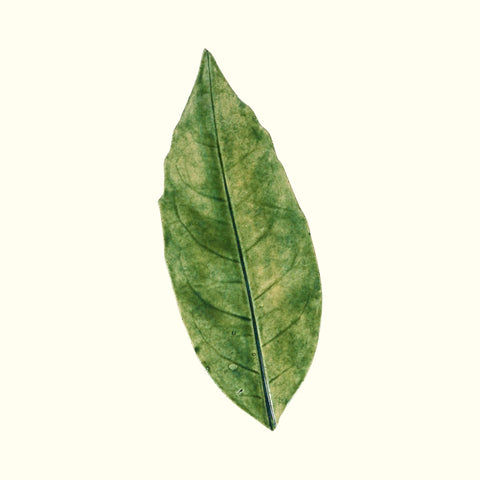
Gathered from Bridie's local garden square in late summer 2021. Slabs of clay were rolled out and the leaves pressed into them then cut around and fired.
Dimensions may vary due to handmade nature of this item - length roughly between 18.5cm and 19cm, width approx. 7cm.
Made by hand in London.

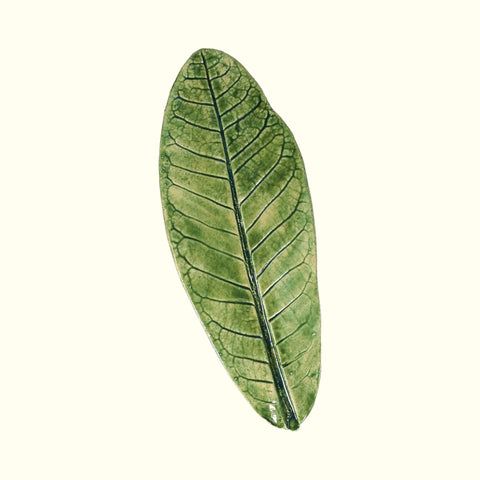
Gathered from Bridie's local garden square in late summer 2021. Slabs of clay were rolled out and the leaves pressed into them then cut around and fired.
Dimensions may vary due to handmade nature of this item - length roughly between 18cm and 19cm.
Made by hand in London.

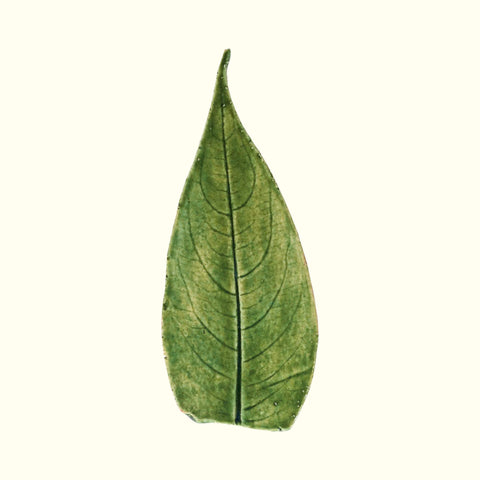
Gathered from Bridie's local garden square in late summer 2021. Slabs of clay were rolled out and the leaves pressed into them then cut around and fired.
Dimensions may vary due to handmade nature of this item - length roughly between 11.5cm and 12.5cm.
Made by hand in London.

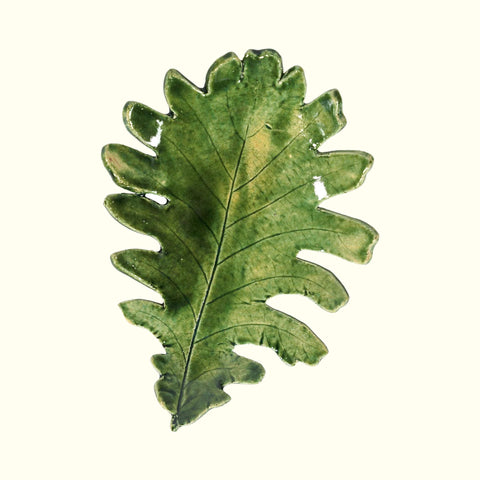
Gathered from Bridie's local garden square in late summer 2021. Slabs of clay were rolled out and the leaves pressed into them then cut around and fired.
Dimensions may vary due to handmade nature of this item - length roughly between 14cm and 17.5cm, width approx. 10cm.
Made by hand in London.

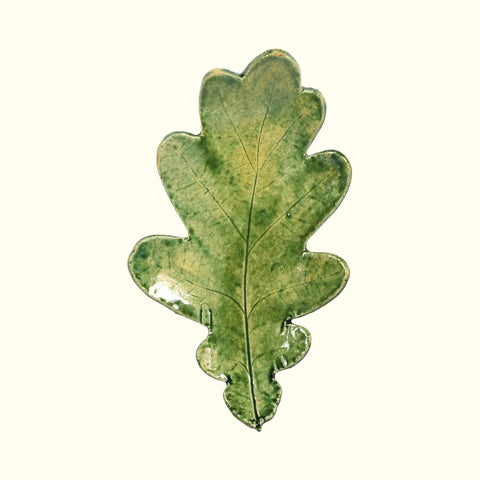
Gathered from Bridie's local garden square in late summer 2021. Slabs of clay were rolled out and the leaves pressed into them then cut around and fired.
Dimensions may vary due to handmade nature of this item - length roughly between 13cm and 11.5cm.
Made by hand in London.

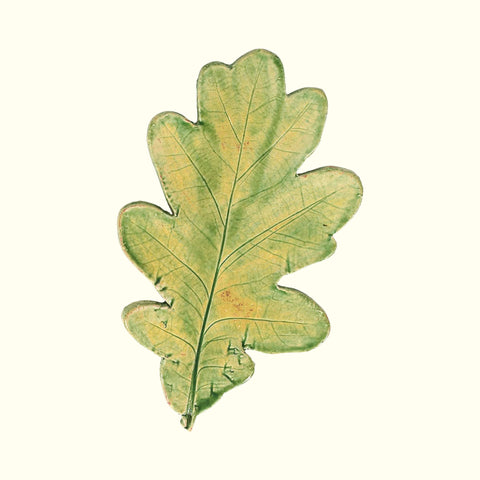
Gathered from Bridie's local garden square in late summer 2021. Slabs of clay were rolled out and the leaves pressed into them then cut around and fired.
Dimensions may vary due to handmade nature of this item - length roughly between 14cm and 16cm.
Made by hand in London.

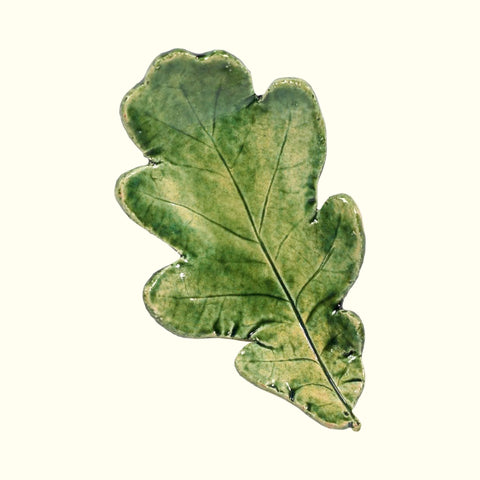
Gathered from Bridie's local garden square in late summer 2021. Slabs of clay were rolled out and the leaves pressed into them then cut around and fired.
Dimensions may vary due to handmade nature of this item - length roughly between 10cm and 11cm.
Made by hand in London.
